
Basement Remodeling and Waterproofing in Prince George's and Montgomery County, MD
The fastest way to waste $40,000 is to finish a basement that is not dry. New drywall over a damp wall grows mold in months.
L&T Contractors fixes the water problem first, then builds the room. We finish on time or we pay you $500 a day.
Dry First. Finished Second.
Every basement project we take starts with one question: where is the water coming from? Often the answer is outside the house. Gutters that dump at the foundation. Soil that slopes toward the wall. A downspout that ends two feet from the corner. Fixing the grade and the gutters costs a fraction of what the inside work does.
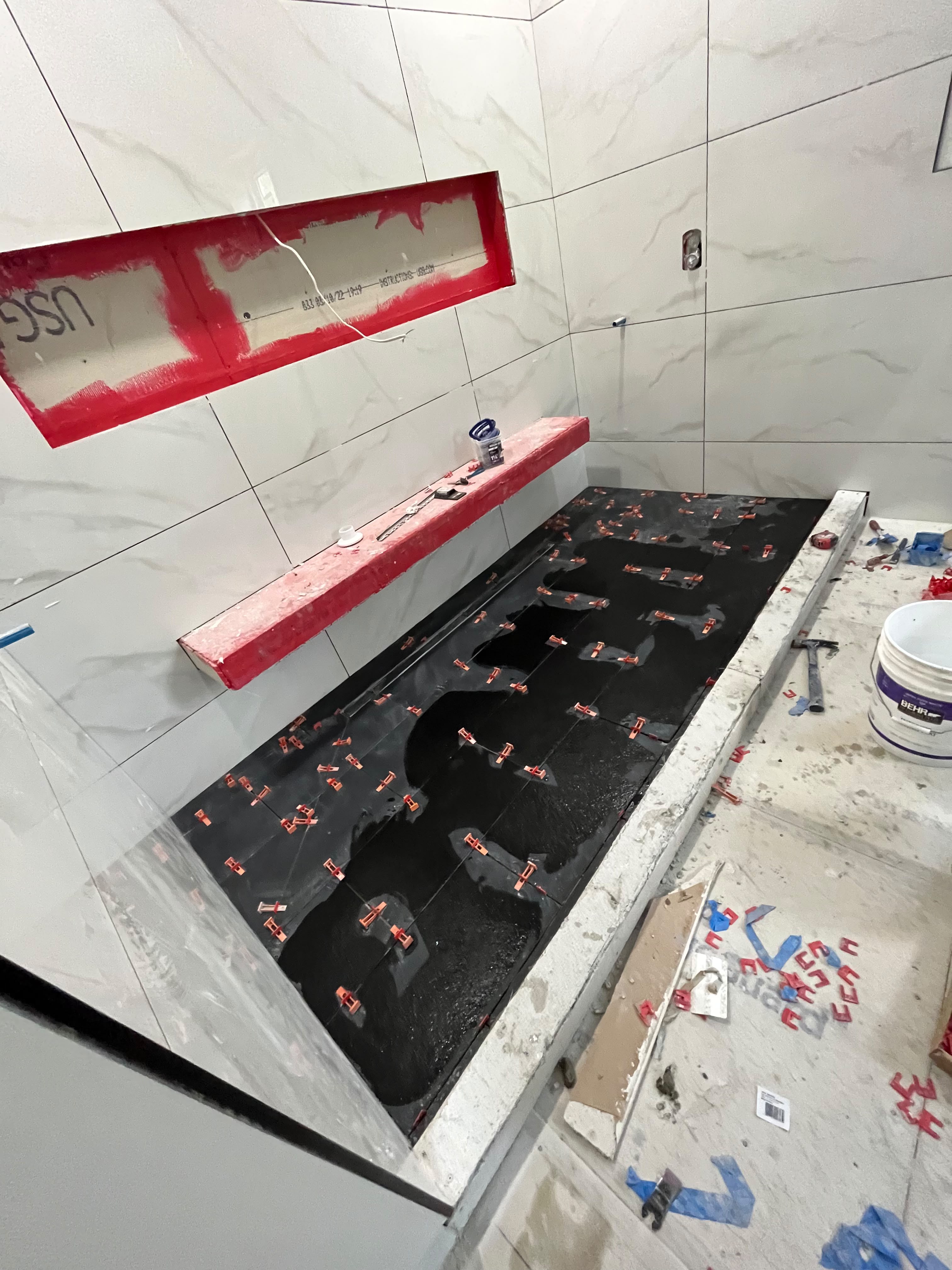
When moisture still comes through, we deal with it at the wall. The photo on this page shows a vapor barrier installed on a basement wall before it was closed up. That layer is what keeps the finished room dry.
What Finishing a Basement Involves
Moisture control: grading, gutters, wall sealing and vapor barrier where needed.
Framing and insulation sized for a below-grade wall.
Electrical, lighting and outlets to code.
Drywall, flooring, paint and trim.
A bathroom, bar or laundry area when the plan calls for it.
Three Rules We Follow
No finished walls over a wet wall.
A basement bedroom needs a proper exit window. It is a safety rule, and it comes up in permit review.
Ceiling height matters. We measure before you fall in love with a layout.
Cost and Timeline
Every basement is different, so we price each one after we see it. The estimate includes any moisture work, so you do not find that bill later. Once we agree on scope, the price holds unless you add to it.
Signs Your Basement Has a Water Problem
White, chalky deposits on the concrete. That is minerals left behind as water evaporates.
A musty smell that comes back after cleaning.
Paint or wall coverings that bubble or peel off the concrete.
Rust on the bottom of the furnace, water heater or support posts.
Water stains along the floor edge after heavy rain.
Any of these means the basement needs attention before a finish is installed. Ignore them and you will pay to open the walls again.
What Maryland Rain Does to Foundations
Heavy storms come through the DMV every year, and soil around a foundation swells and pushes water toward the wall. Older homes can have clay soil that holds water against the house. We look at the exterior grade, the gutters and the downspouts before we look inside, because the cheapest fix is usually outside.
Egress, Ceiling Height and Code
A finished basement is useful in direct proportion to how well it follows code. A bedroom needs a way out, usually a window of a minimum size or an exterior door. Ceilings need a minimum height in living areas. Stairs need proper rise and rails. Your plan has to account for those before you get attached to a layout. We measure on the first visit and tell you what works.
What People Use Finished Basements For
Family rooms and media spaces.
Guest suites with a bathroom.
Home offices.
Rental or in-law spaces where rules and permits allow it.
Rental units carry extra rules in both counties, including separate entrances, egress and sometimes licensing. If that is your goal, tell us at the estimate and we point you to the right office before you spend on design.
Heating, Cooling and Comfort
Basements are cold in winter and damp in summer if air is not handled well. We plan registers, returns and insulation so the room stays comfortable. A finished basement without airflow feels like a cellar with nicer walls.
What to Expect, Phase by Phase
Week one: inspection, moisture work and permit filing.
Framing, electrical and plumbing rough-in, followed by an inspection.
Insulation, drywall, flooring, paint and trim.
Final walk-through and punch list.
Dates depend on scope and permit review. Your written schedule shows each phase. If the moisture fix takes longer than planned, you hear it from us the day we know.
Questions to Ask Any Basement Contractor
How do you handle water? What happens if you find moisture after the walls are up? Who pulls the permit? A good answer to each is specific. A vague answer means the basement is a gamble, and you hold the risk.
Budget Where It Counts
In a basement, spend on what you cannot change later: moisture control, insulation, framing, electrical and the egress window. Finishes can be upgraded down the road. Hidden systems cannot, not without tearing out what you paid for. If the budget is tight, finish less of the space and do that part right.
We also suggest leaving access to shutoffs, cleanouts and the main panel. Every basement has a few spots you will need to reach someday.
Every job comes with the L&T Promise. We finish on time or we pay you $500 for every late day, up to $2,500. Your home stays livable, the work carries a 2-year warranty, and you get a same-day answer when you call. Delays you cause and permit or inspection delays are excluded. Full terms are on the Promise page.
Book before December 31 and get a free upgrade. Applies to interior and exterior remodeling contracts signed by December 31, 2026. We put it in writing.
See Free Upgrade DetailsBasement Questions
Can you finish my basement if it leaks?
Not until the leak is fixed. We find the source and fix it first.
Do I need a permit to finish a basement?
Usually yes. Electrical, plumbing and living-space conversions need one. We tell you at the estimate.
Can I put a bedroom down there?
Often yes, if ceiling height and exit windows meet code. We check on the first visit.
How long does it take?
It depends on size and scope. Your written schedule gives dates.
Get a Free Estimate
We come out, check for moisture, and give you one firm number in writing.