
Patios and Concrete Work in Prince George's and Montgomery County, MD
A patio looks finished the day it is installed. The test comes after the first hard winter.
L&T Contractors builds paver patios and concrete walkways that stay flat. We finish on time or we pay you $500 a day.
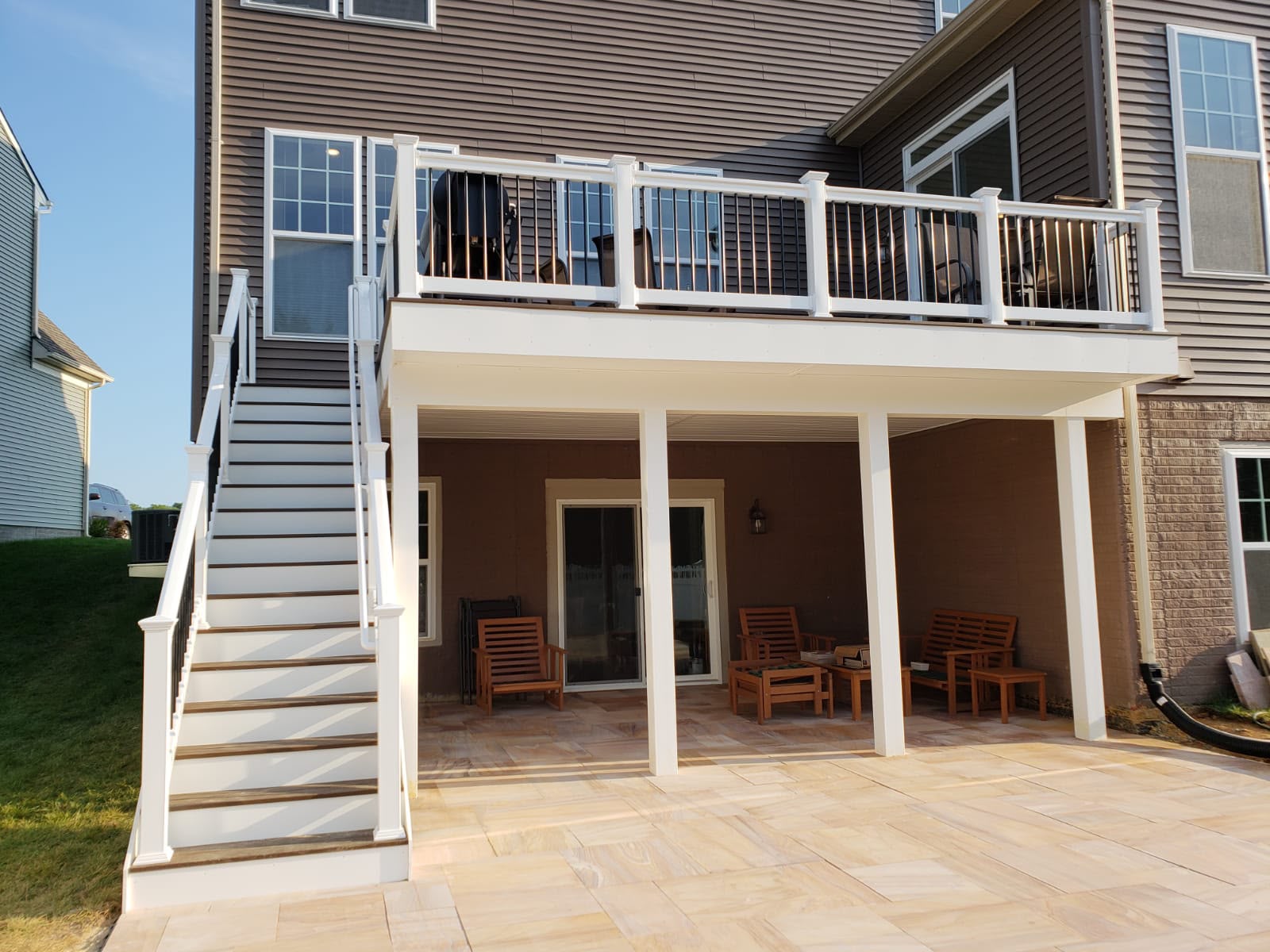
The Base Is the Job
Pavers sit on stone, and the stone sits on soil. Most of the work happens below what you see. We excavate to the right depth, build a compacted stone base, and set pavers on a level bed. Skip the compaction and the patio settles in a year. That is the most common reason people call us to redo a patio.
Pavers or Poured Concrete?
Pavers handle ground movement well and can be repaired by lifting a few stones. They cost more up front.
Poured concrete costs less and works well for walkways, steps and utility areas. It needs control joints so it cracks where we plan.
For a patio you will entertain on, we usually recommend pavers. For a straight walkway to the front door, concrete does the job.
Water Goes Away From the House
Every patio and walkway slopes away from the foundation. This is the detail that keeps water out of your basement. We set the slope before anything else.
Covered Spaces
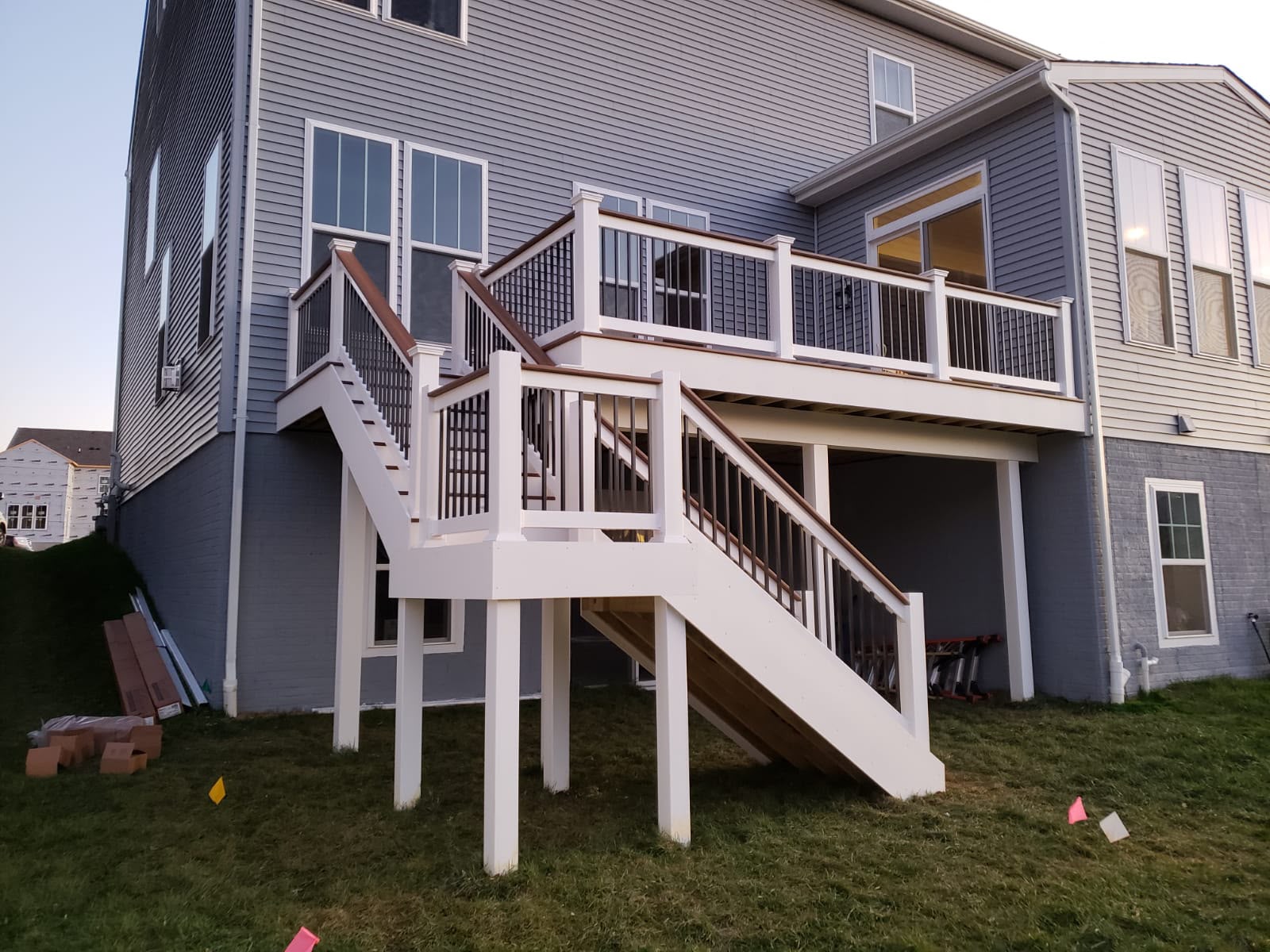
We also build covered patios attached to decks and stairs, as shown on this page.
Cost
Priced per job by size, material and site access. One firm number at the free estimate.
Patio Materials, Compared Honestly
Concrete pavers: the most popular choice. Wide range of styles, repairable, and slip-resistant when textured.
Natural stone: beautiful and costly. Irregular shapes mean more labor.
Stamped or poured concrete: lower cost, but cracks happen and repairs show.
For most backyards in our area, we recommend interlocking concrete pavers. They tolerate freezing and thawing better than a rigid slab, and a damaged section can be lifted and reset instead of replaced.
Edge Restraints and Joint Sand
Two details decide whether pavers shift. An edge restraint holds the outer pavers in place so the whole field cannot spread. Polymeric sand in the joints locks stones together and blocks weeds. Both are small parts of the cost and both get skipped on cheap jobs.
Walkways and Steps
A front walkway is the first thing guests step on. We build them wide enough for two people, with a slope that sheds water and steps with even risers. Uneven steps cause falls, and inspectors look at them closely. We pour or lay steps to a consistent rise and run and add rails where code requires.
Replacing Old Concrete
Cracked concrete is not always a reason to replace the whole slab. We look at why it cracked. If the base failed, new concrete on the same base fails too. If tree roots or drainage caused it, those get fixed first. We tell you whether to patch, overlay or replace.
Winter and Salt
Freeze and thaw is hard on any hard surface. Good drainage keeps water from sitting under pavers and heaving them. We also advise on de-icing products, because some rock salt damages concrete and pavers over time.
How a Paver Patio Gets Built
Mark the area and check the slope and drainage.
Excavate and haul away soil.
Lay and compact the stone base in layers.
Set a screeded sand bed and place the pavers.
Cut edges, install restraints, sweep in polymeric sand and compact the surface.
A patio takes days, not hours, and most of those days are spent below the pavers. That is also why a patio built in a rush starts to sink within a season.
Maintenance
Sweep, rinse and reapply joint sand every few years. Re-sealing is optional, and some owners like the color it brings out. Fix a low spot early. A single settled stone is easy to lift and reset. Ignored, it grows.
Planning the Space
A patio works when it matches how you live. A table for six needs about 12 by 12 feet with room to push chairs back. A fire pit needs a clear zone around it. A grill needs space away from siding and overhangs. Lay out the furniture you plan to own, and we mark the outline with paint before any digging starts.
Lighting and Power
Outdoor lighting along a patio edge makes evenings safer and the space usable after dark. Low voltage lighting is simple to add during construction and awkward after. Tell us now, even if you plan to wait on the fixtures. We can leave conduit in place for later.
Plants, Soil and Settling
Large trees near a patio can lift pavers with their roots. Downspouts that pour onto a patio wash out the sand. We adjust the plan around both. If we find a problem like these at the estimate, you will hear it then.
Every job comes with the L&T Promise. We finish on time or we pay you $500 for every late day, up to $2,500. Your home stays livable, the work carries a 2-year warranty, and you get a same-day answer when you call. Delays you cause and permit or inspection delays are excluded. Full terms are on the Promise page.
Book before December 31 and get a free upgrade. Applies to interior and exterior remodeling contracts signed by December 31, 2026. We put it in writing.
See Free Upgrade DetailsPatio and Concrete Questions
Do I need a permit for a patio?
It depends on size, location and your town or HOA. We check at the estimate.
How long does a patio last?
A properly based paver patio lasts for decades.
Can you replace an old cracked walkway?
Yes. We remove it, fix the base and pour or lay new.
Get a Free Estimate
We measure the area, check the slope, and give you one firm number in writing.