
Deck Building in Prince George's and Montgomery County, MD
Most decks do not wear out. They fail at the wall. Water gets behind the board that attaches the deck to the house, the framing rots, and one day the deck pulls away.
L&T Contractors builds decks that last, with permits handled and a finish date we back with $500 a day.
Where Decks Fail
The weak point is the ledger, the board that bolts the deck to your house. If it is not flashed properly, water runs behind it every time it rains. We flash it, bolt it through the house framing, and never rely on nails alone. This is the first thing to ask any deck builder.
The second weak point is the footings. A deck that moves with frost cracks its own connections. Footings go below the frost line and onto solid ground.
Composite or Wood?
Composite costs more up front and needs almost no upkeep. Pressure-treated wood costs less and needs staining every couple of years. If you plan to stay in the house for 10 years or more, we usually point people to composite. If budget is tight, a well-built wood deck beats a poorly built composite one every time.
Stairs and Railings
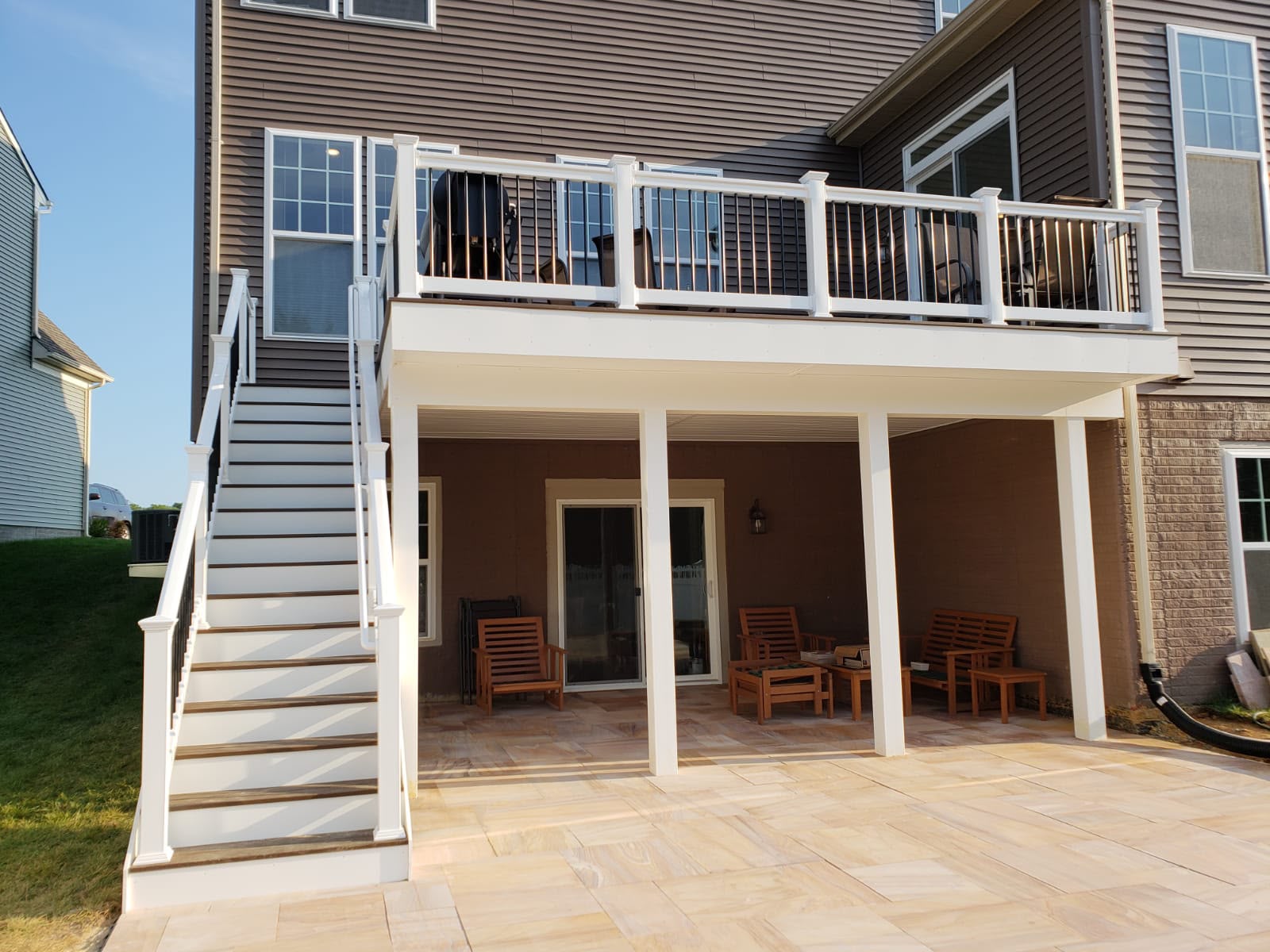
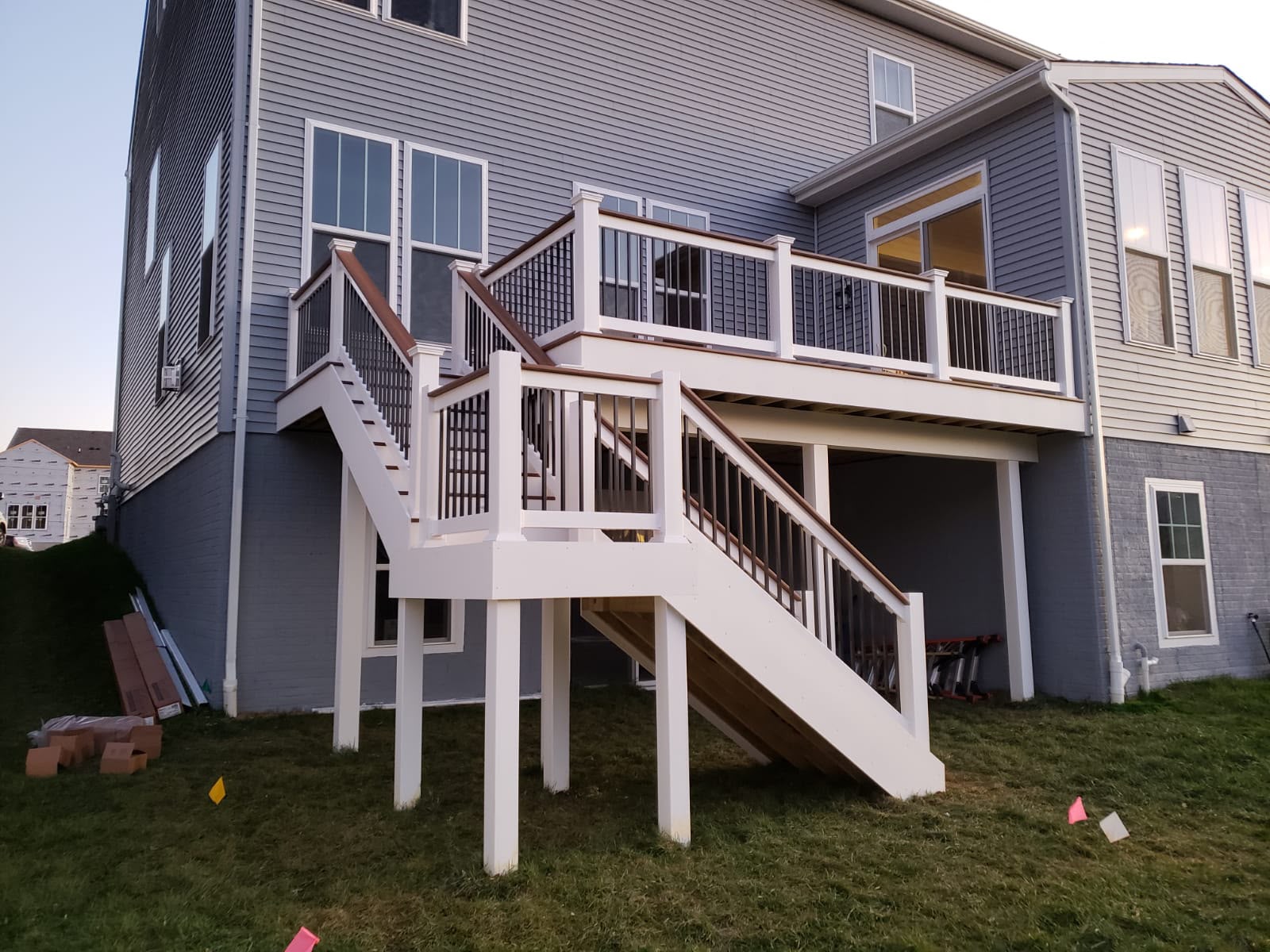
Stairs and railings are where inspectors look first, and where injuries happen. Rise and run must be even. Railings must hold weight. Our projects include white railings, wide stairs and covered sections, as shown in the photos here.
Permits and HOAs
Montgomery County requires a building permit for every deck regardless of height, and an electrical permit can apply for lighting or a hot tub. In Prince George's County, DPIE reviews permits, and some towns have their own offices. HOAs often need to approve the design first. We help with all of it.
Cost
Decks are priced per job, by size, materials and complexity. We measure the site and give you one firm number at the free estimate.
Pressure-Treated Wood, Step by Step
Pressure-treated lumber has been the standard for decades and is still a solid choice. It takes stain well, costs less than composite and is easy to repair. The downsides are maintenance and movement. Boards cup, check and gray without a sealer, so plan on cleaning and restaining every couple of years. A deck built with good lumber, proper spacing and the right fasteners can last well past 20 years.
Composite: What You Are Paying For
Composite boards cost more per square foot, and you are buying time. No staining, no sanding, and resistance to rot and splinters. Cheap composite can scratch and fade. Better lines resist both and carry longer manufacturer warranties. We use the board that fits your budget and tell you straight when a cheaper line is a poor value.
Fasteners and Hardware Matter
Everything that holds a deck together lives outdoors. Joist hangers, screws, bolts and flashing tape need to be rated for the treated lumber they touch. Cheap fasteners corrode and fail from the inside. This is a cost most buyers never see and one we never cut.
Size, Height and Layout
Ground-level decks are simpler and cheaper, but still need proper footings.
Raised decks need guard rails, stairs and more framing.
Multi-level decks and covered sections add cost and permits.
A deck is easiest to build when it is sized to how you use it. A dining area needs about 10 by 10 feet for a table and chairs with room to pull them out. A grill station needs clearance. We lay it out with chalk or tape before we build so you can stand in it.
Lighting, Outlets and Extras
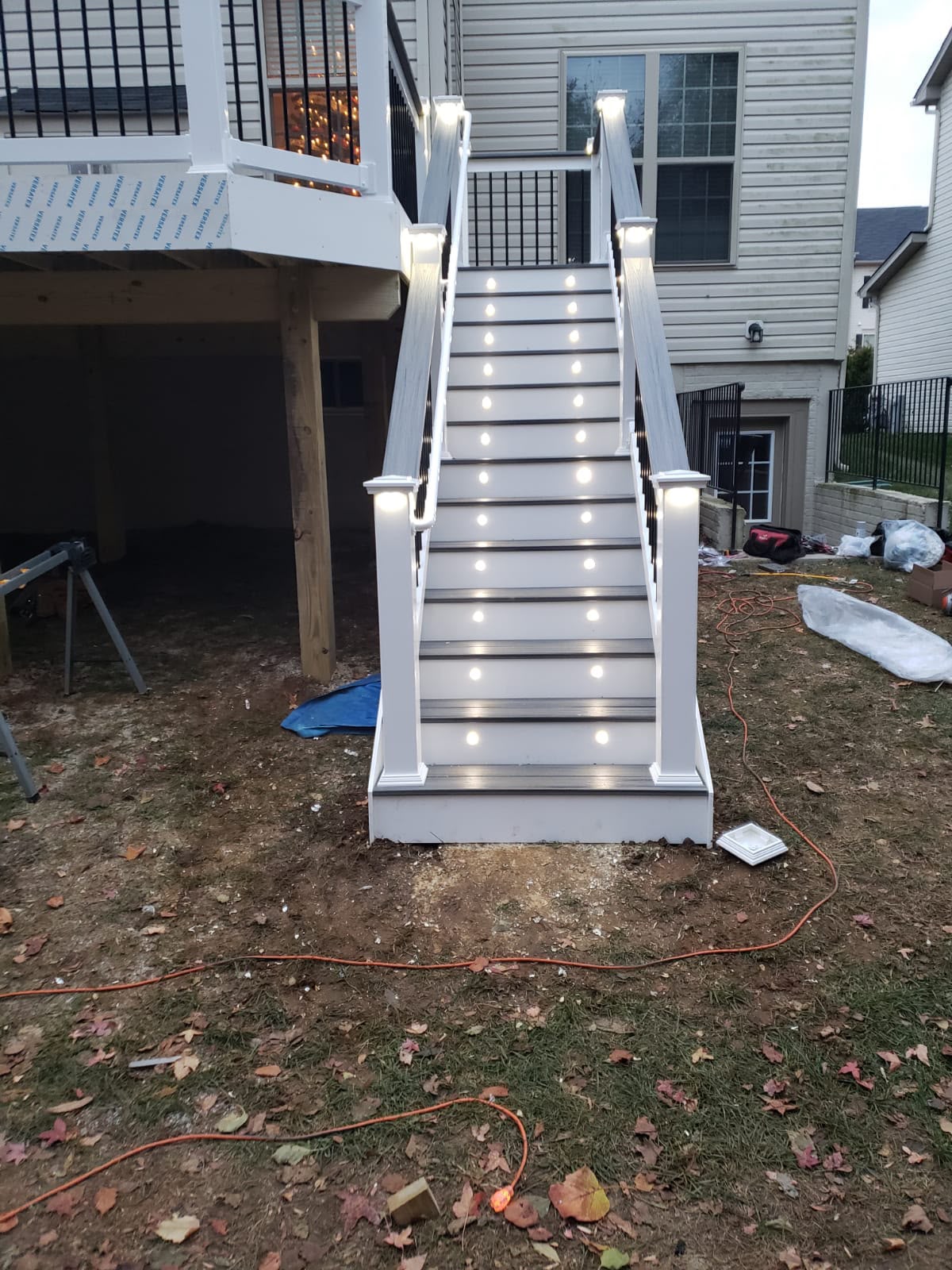
Stair lights, post caps and outlets add comfort and safety, and they can trigger an electrical permit. Tell us what you want and we plan it into the permit and the price from the start.
Day by Day: How a Deck Gets Built
Layout and permit. We stake the footprint, confirm the design and file.
Footings. Holes dug to depth, concrete poured, inspection if required.
Framing. Posts, beams and joists set level, ledger flashed and bolted.
Decking, stairs and railings.
Final inspection and walk-through.
The framing is the part nobody photographs and it is the part that matters. We take our own photos of footings and framing during the build and share them with you, because you will not see them again once the boards go on.
Maintenance, Honestly
Every deck needs some care. Sweep debris from between boards, wash once a year, and check fasteners and railings each spring. Wood decks need sealing on a schedule. Composite needs washing. Neither is a heavy lift, and a deck that is cared for pays you back for years.
Before You Call a Deck Builder
Take five minutes to measure the space, note where the door sits and think about how you will use the deck. Dining, grilling, lounging and playing each ask for different layouts. Check whether your HOA has rules on size, color or materials. Photograph the house from the yard. With those, a first visit gets to real numbers fast.
Every job comes with the L&T Promise. We finish on time or we pay you $500 for every late day, up to $2,500. Your home stays livable, the work carries a 2-year warranty, and you get a same-day answer when you call. Delays you cause and permit or inspection delays are excluded. Full terms are on the Promise page.
Book before December 31 and get a free upgrade. Applies to interior and exterior remodeling contracts signed by December 31, 2026. We put it in writing.
See Free Upgrade DetailsDeck Questions
How long does a deck take?
Most decks take days to a couple of weeks once permits are issued. Your schedule shows dates.
Do you pull the permit?
We handle the filing and you sign what needs your signature.
Can you add a roof or cover?
Yes, covered decks and patios are part of our work.
Is a warranty included?
Yes, 2 years on our work.
Get a Free Estimate
We measure your yard and give you one firm number in writing.